

On this page
- Use the calculator
- Measure grass, rather than the whole lot
- Use a tape or measuring wheel on the ground
- A worked example: 3,000 square feet of grass
- Use the calculator as an arithmetic helper
- When aerial imagery helps—and where it misleads
- Record the features that square feet miss
- Turn the yard profile into a useful shortlist
- Common questions
- Models discussed
Your measurements, simple arithmetic
Lawn-area calculator
Add up to three rectangles and subtract non-grass areas. Enter zero for unused rectangles. Use the same horizontal measurement method throughout.
Area = sum of length × width, minus non-grass deductions. This estimate does not establish runtime, slope safety or mower suitability. Measure irregular sections separately; an acre is 43,560 sq ft.
Measure grass, rather than the whole lot
A house, driveway, patio and planting beds do not need mowing. If you use the property boundary as your starting shape, subtract those spaces. Alternatively, measure only the individual grass sections and add them. Both methods can work; mixing them carelessly can count an area twice or subtract it twice.
Separate front, back and side lawns on a quick sketch. Include grass behind a shed or beyond a narrow gate if you actually mow it. Leave an unmown planted slope out of the grass total, but note the boundary so the estimate still reflects your maintenance plan.
Use a tape or measuring wheel on the ground
University extension guidance supports breaking a lawn into manageable shapes. Measure length and width in the same unit, and write each figure on the sketch before calculating. A rectangle uses length × width. A triangle uses base × perpendicular height ÷ 2; a diagonal side is not the triangle’s height.
For irregular boundaries, smaller subdivisions usually give a more useful estimate than one large box. Record uncertain edges and recheck the sections that materially change the total. You do not need to present a rough yard sketch with survey-level precision, but the arithmetic should still be correct.
A worked example: 3,000 square feet of grass
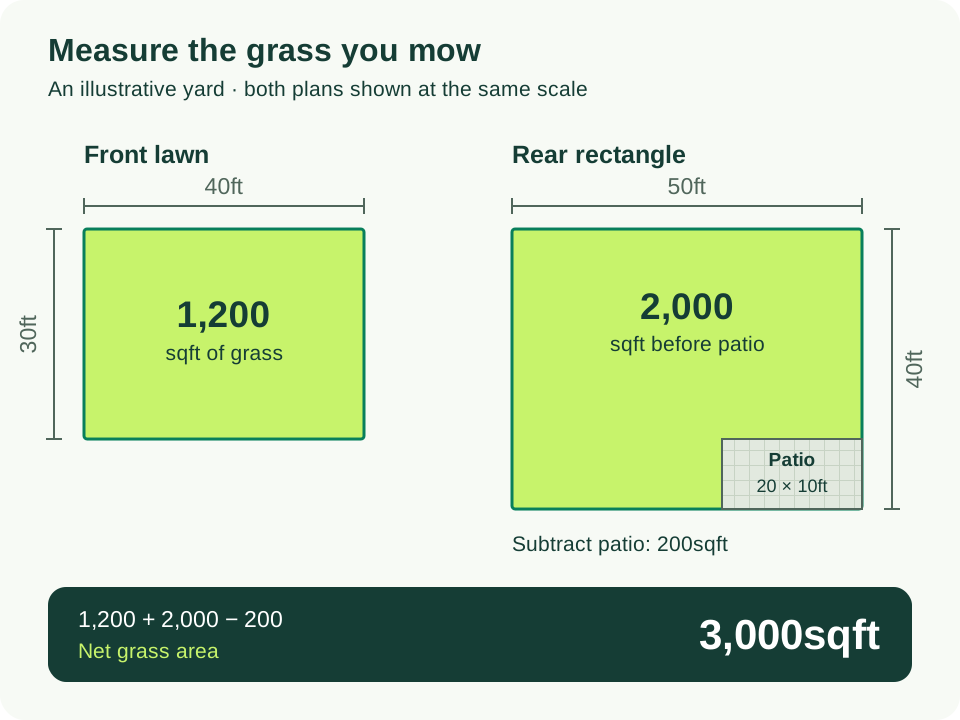
This is an illustrative yard, not a measured property or a mower coverage test. The rear-lawn rectangle below includes a patio, so that patio is subtracted once. If you measured only the grass around it, you would not subtract it again.
| Section | Calculation | Area |
|---|---|---|
| Front lawn rectangle | 40ft × 30ft | 1,200sqft |
| Rear rectangle, including patio | 50ft × 40ft | 2,000sqft |
| Patio inside rear rectangle | 20ft × 10ft | Subtract 200sqft |
| Net grass total | 1,200 + 2,000 − 200 | 3,000sqft |
| Area in acres | 3,000 ÷ 43,560 | About 0.0689acre |
Use the calculator as an arithmetic helper
Enter measured dimensions for each supported shape using consistent units. Add grass sections and deduct only exclusions contained within those sections. The underlying formula is net lawn area = sum of included areas − sum of included non-grass exclusions. Acres = net square feet ÷ 43,560.
The result describes your inputs. It cannot verify a boundary hidden under a tree, identify a slope or know whether you measured the correct route through a gate. Keep the sketch and method with the result so you can update the total after a new bed or patio changes the lawn.
When aerial imagery helps—and where it misleads
An aerial area tool can be useful for larger or awkward lawns. Trace the grass outline using recent imagery and check the scale and output units. Trees can hide the actual edge, and an older image may show grass where a patio now sits.
Walk the site to resolve the areas the image cannot show. If exact boundaries matter for a different purpose, a lawn-planning estimate is not a property survey. For choosing mowing equipment, clearly identifying an estimate is more useful than presenting many decimal places that the image cannot support.
Record the features that square feet miss
Two lawns of equal area can take different amounts of time. Trees, tight turns, clipping collection, separate sections and uneven ground change the routine. A narrow gate can rule out an otherwise attractive mower even when the lawn is small.
Keep these observations beside the number rather than trying to force everything into a single area score. Follow the exact mower manual’s operating and slope restrictions; a small area does not make a hazardous bank suitable.
- Narrowest clear access width and route between lawn sections.
- Trees, beds, turns and places requiring repeated passes.
- Normal mowing time and whether you bag, mulch or discharge.
- Grass type, target height and typical growth conditions.
- Terrain and traction concerns requiring manual-specific checks.
Turn the yard profile into a useful shortlist
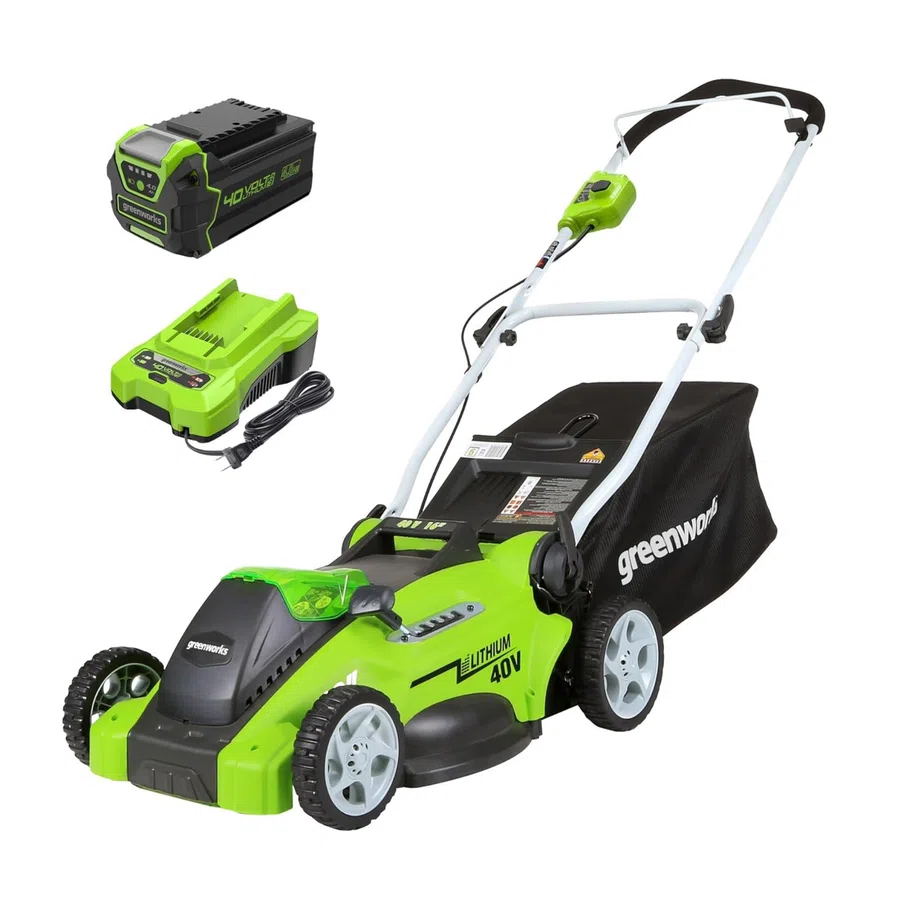
The Greenworks 25322 has a verified 16-inch cutting path, making compactness a relevant consideration around confined grass. More passes are the trade-off on open ground. Its cut-height range and battery kit still need to fit the lawn; compactness alone is not a recommendation.
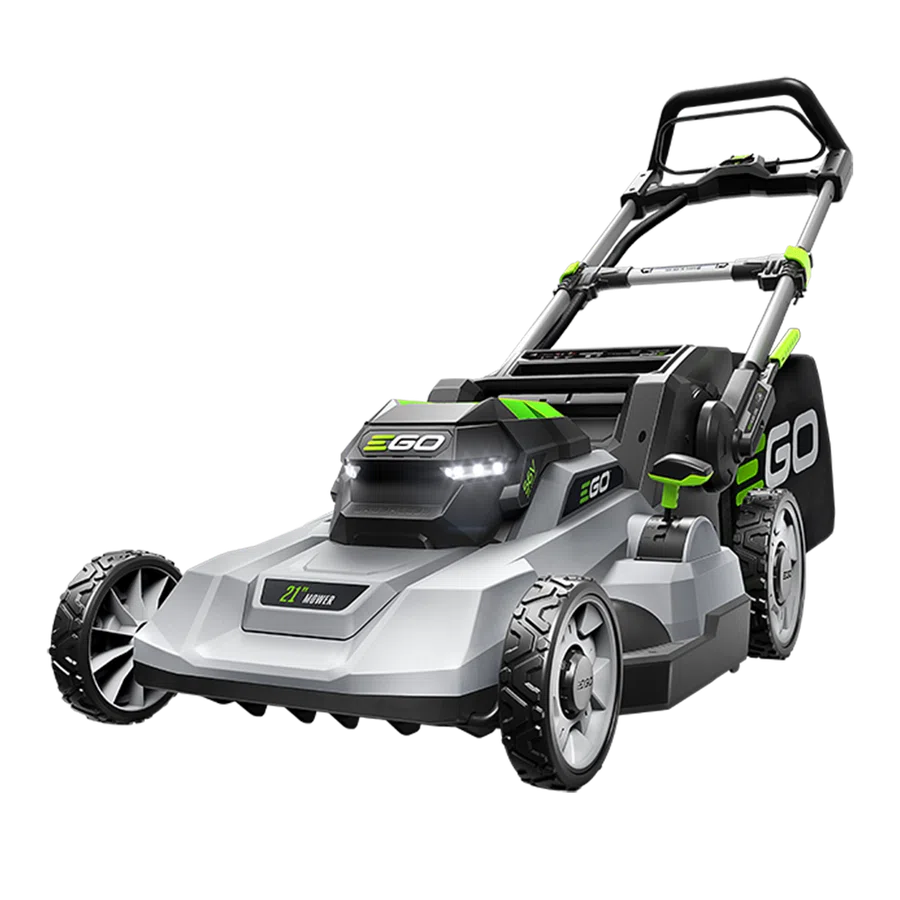
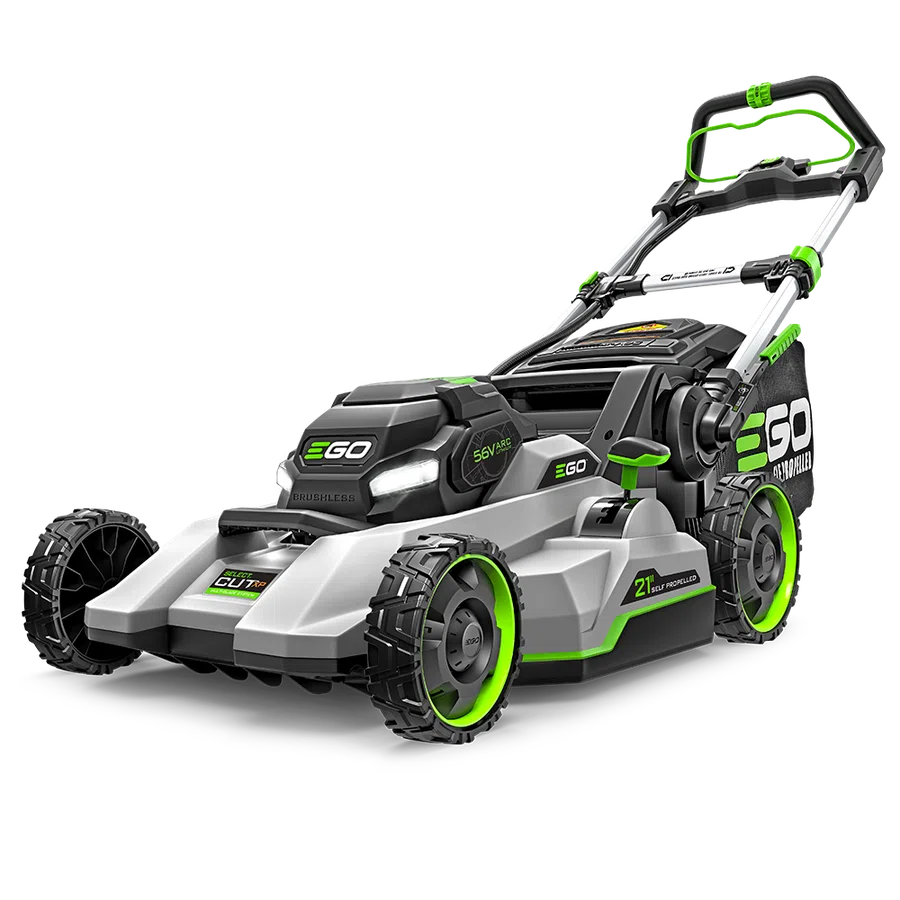
The EGO LM2114 is a full-size push alternative, while the EGO LM2156SP adds drive assistance. Compare pushing effort, access and the complete kit alongside area. Read battery runtime planning before converting a manufacturer acreage claim into an expectation, then use the small-yard guide for suitable trade-offs.
Common questions
How many square feet are in an acre?
One acre is 43,560 square feet. Divide your net grass area in square feet by 43,560 to express it in acres.
Should I subtract the house and driveway?
Yes, if you began with the full lot outline. If you measured grass sections directly, avoid subtracting the same non-grass spaces again.
Does lawn size tell me which battery will finish?
No. Workload, turns, slopes, grass height, mower configuration and pack condition also affect the mowing session.
Models discussed in this guide
These examples link to the model-specific documentation, compatibility and ownership checks in the full reviews.
Model discussed in this guide
Greenworks 25322
40V; Push. 1 × 4Ah.
The full review explains the exact kit, compatibility and ownership limitations for this example.
Model discussed in this guide
EGO LM2114
56V ARC Lithium; Push. 1 × 6Ah.
The full review explains the exact kit, compatibility and ownership limitations for this example.
Model discussed in this guide
EGO LM2156SP
56V ARC Lithium; Self-propelled. 1 × 10Ah.
The full review explains the exact kit, compatibility and ownership limitations for this example.
Documentation and attribution: sources for this article. How we evaluate mowers.

Written by Steven Burt
Lawn care enthusiast in Nixa, Missouri, and owner of Lawn Current. Meet Steven · Suggest a correction